The Bridgeport times and evening farmer. (Bridgeport, Conn.) 1918-1924, February 15, 1919, Page 6, Image 6 – Image provided by Connecticut State Library, Hartford, CT
Tales of Connecticut
How the Connecticut Indians lived, how they were ruled, and what customs they had are matters that will never cease to be interesting. Those who sometimes in this age preach a philosophy of trial marriages will be pleased to note the Connecticut Indians gave this institution a long trial, and found it not a good institution. The Kaiser will note that the system of government he admires, had been tried by the Connecticut Indians, and in this state shown to be a failure. The Indian sachem, or king was an absolute ruler. He received advice, but he alone gave the decision, and this given was scrupulously obeyed.
Connecticut Indians followed the customs of Prussia even to the extent of requiring that their king should be noble on both sides. William the Conqueror, who was the son of a tanner’s daughter, would not have met the requirements of nobility of blood demanded of a ruler of Connecticut Indians. The Sachem was often accuser, and Judge. He was also executioner, for the culprit would assent to no punishment, unless it was death, except
at the hands of his prince. When a young Indian wished for marriage, he presented the girl with whom he was enamoured, with bracelets, belts and chains of wampum. If she received his presents they were married, for a time upon trial. If they pleased each other they were Joined in permanent marriage; but, after a few weeks they were not suited, the man, leaving his presents, quitted the girl and sought another wife and she another husband. In this manner they courted until two met who were agreeable to each other. Before marriage the consent of the sachem was obtained, and he always Joined the hands of the young pair in wedlock. The Indians in general kept many wives and never thought they had too many. This especially was the case with their sachems. They chose their wives agreeably to their fancy, and put them away at pleasure. When a sachem grew weary of any of his wives he bestowed them upon some of his favorites, or chief men. The Indians, however, had one wife who was the governess of the family, and whom they generally kept during life. Husbands and wives, parents and children, lived together in the same wig wams. The Indian government generally was absolute monarchy. The will of the Sachem was his law. The lives and interests of his subjects were at his disposal, but in all Important affairs he consulted with his counsellors. When they had given their opinions they deferred the decision of every matter to him. Whatever his determinations were they applauded his wisdom and without hesitation obeyed his commands. In council the deportment of the sachems was grave and majestic to admiration. They appeared to be men of great discernment and policy. Their speeches were cautious and politic. The conduct of their counsellors and servants was profoundly respectful and submissive. The counsellors of the Indian kings in New England were not only the wisest but largest and bravest men to be found among their subjects. They were the immediate guard of their sachems, who made neither war nor peace, nor attempted any weighty affair without their advice. In war and all great enterprises, dangers and sufferings, these discovered a boldness and firmness of mind exceeding all the other warriors. To preserve this order among the Indians great pains were taken. The stoutest and most promising boys were chosen and trained up with peculiar care in the observation of certain Indian rites and customs. They were kept from all meats, trained to cuarse fare and made to drink the Juice of bitter herbs, until it occasioned violent vomiting. They were beaten over the legs and shins with sticks and made to run through brambles and thickets to make them hardy; and, as the Indians said, to make them more acceptable to Hobbamocko. These ministers of state, were in league with the priests or powaws. To keep the people in awe, they pretended, as well as the priests, to have converse with the invisible world; and that Hobbamocko often appeared to them. Among the Connecticut Indians, and among all the Indians in New England, the crown was hereditary, always descending to the eldest son. When there was no male Issue, the crown descended to the female. The blood royal was held in each veneration that no one was considered as heir to the crown but such as were royally descended on both sides. When a female acceded to the crown she was called the queen squaw. There were many petty sachems, tributary to other princes on whom they were dependent for protection, and without whose consent they made neither peace, war, nor alliances with other nations. The revenues of the crown consisted of the contributions of the people. They carried corn and the first fruits of their harvest of all kinds. Beans, squash, berries, roots and nuts were presented to their sachem who went out to them and by good words and some small gifts expressed his gratitude. They made him presents of flesh, fish, fowl, moose, bear, deer, beaver and other skins. One of the counsellors was commonly appointed to receive the tribute. By these gifts the table was supplied. He kept open house for all strangers and travellers. Besides, the prince claimed an absolute sovereignty over the seas within his dominion. Whatever was stranded on the coast, all wrecks and whales floating on the sea and taken were his. In war, the spoils of the enemy and all of the women and royalties of the prince conquered belonged to him who made the conquest. The Sachem was not only examiner, Judge and executioner in all criminal cases, but in all cases of Justice between one man and another. In cases of dishonesty the Indians proportioned the punishment to the number of times the delinquent had been found guilty. For the first offense he was reproached for his villariy In the most disgraceful manner; for the second he was beaten with a cudgel upon his naked back. If he still persisted in his dishonest practices and was found guilty a third time, besides a drubbing, he was sure to have his nose slit, that all men might know and avoid him. Murder was in all eases punished with death. The sachem whiped the delinquent and slit his nose in cases which required these punishments; and he killed the murderer unless he were at a great distance. In this case, In which execution could not be done with his own hands, he sent his knife by which it was effected. The Indians would not receive any punishment, which was not capital from the hands of any except their sachem. They would” neither be whipped, beaten or slit by an officer; but their prince might inflict these punishments to their greatest extremity and they would neither run, cry nor flinch. Indeed, neither the crimes nor the punishments are esteemed so infamous, among the Indians, as to groan or shrink under sufferings. The Sachems were so absolute in their government that they condemned the limited authority of the English governors. The Indians had no kind of coin; but they had a sort of money which they called wampum, or wampumeag. It consisted of small beads most curiously wrought out of shells and perforated in the center so that they might be strung on belts, in chains and bracelets. These were of several sorts. The Indians in Connecticut, and in New England m general, made black, blue and white wampum. Six of the white beads passed for a penny and three of the black or blue ones for the same. The Five Nations made another sort which were of purple color. The white beads were wrought out of the inside of the great conchs, and the purple out of thee inside of the mussel shell. They were made perfectly smooth and the perforation was done in the neatest manner. Indeed, considering that the Indians had neither knife, drill or any steel or iron instrument, the workmanship was admirable. After the English settled in Connecticut, the Indians strung these beads on belts of cloth in a very curious manner. The squaws made caps of cloth rising to a peak over the top of the head, and the forepart was beautiful with wampum, curiously wrought upon them. The Six Nations later wove and strung them on belts which they .gave in their treaties as a Confirmation of their speeches and the seals of their friendship.
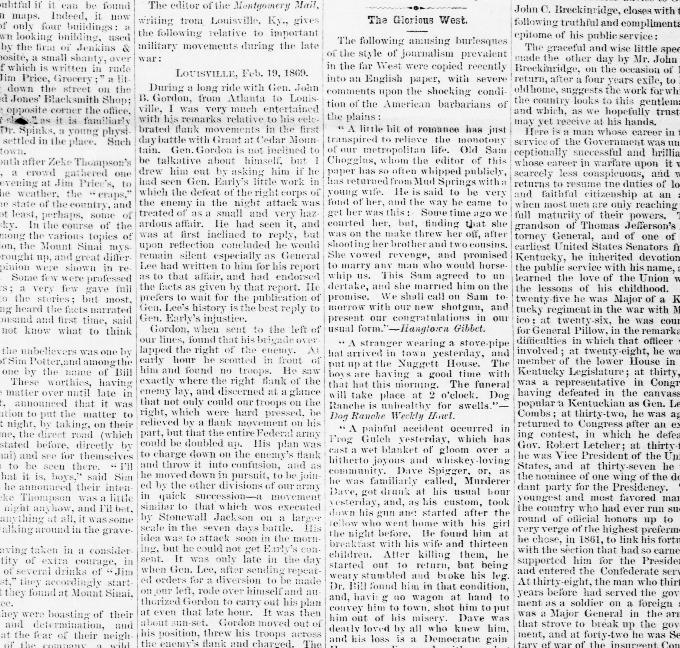
The Albany register. (Albany, Or.) 1868-18??, May 01, 1869, Image 1 – Image provided by University of Oregon Libraries; Eugene, OR
Susan Shepard Notes: It is by Ambrose Bierce and meant as humor. The various tidbits were eventually collected into a book called “The Fiend’s Delight” in 1873. The daily dispatch. (Richmond [Va.]) 1850-1884, March 15, 1869, Image 3 – Image provided by Library of Virginia; Richmond, VA
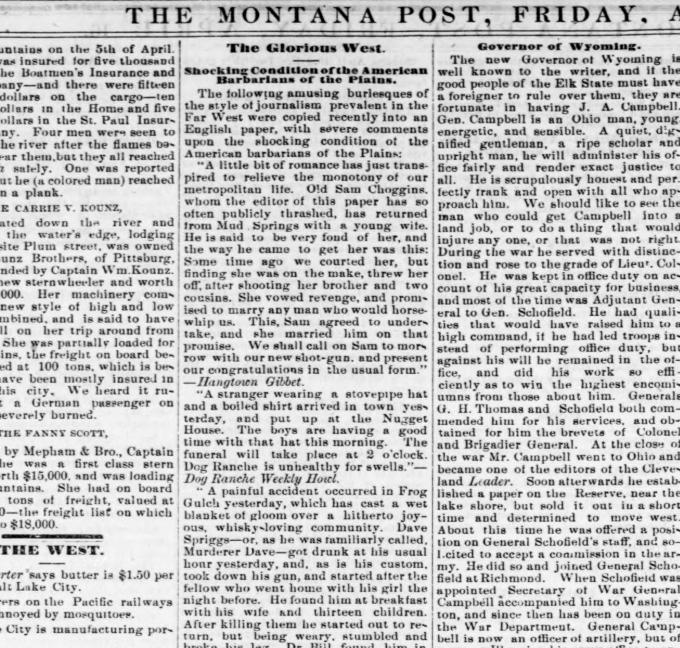
American citizen. (Canton, Miss.) 1864-1890, March 27, 1869, Image 1 – Image provided by Mississippi Department of Archives and HistoryThe Montana post. (Virginia City, Montana Territory [i.e. Mont.]) 1864-1869, April 16, 1869, Page 4, Image 4 – Image provided by Montana Historical Society; Helena, MT
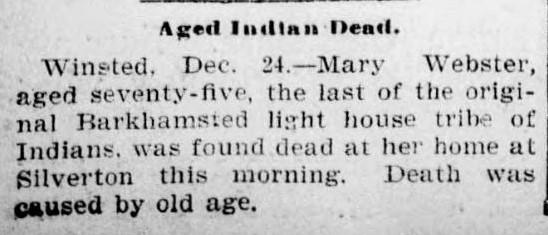
Daughter of William Preston Wilson & Harriette West
b: Jan 1827 (Barkhamsted, CT) – d: Dec 24, 1901 (Silverton?)
m: Solomon Marsh Webster on Oct 06, 1850
in Southington, Hartford, Connecticut, USA
The Daily morning journal and courier. (New Haven, Conn.) 1894-1907, December 25, 1901, Image 1 – Image provided by Connecticut State Library, Hartford, CTI have the PDF version of this – if interested email me at chagumdescendants@gmail.com for a copy
The Old “Lighthouse” and the Strange Tribe of Barkhamsted – Only Two Mournful Survivors of it – The Connecticut Courant, Hartford Connecticut Jan 24, 1900
Was it Founded by a Runaway Wethersfield Girl and a Disappointed Narragansett Indian – Theories as to an Interesting Bit of Early Connecticut History (Special to the Courant) Winsted, Jan 24. A generation or two ago, the “Barkhamsted Lighthouse´´ had a widespread notoriety. It was a queer name to be clinging to a wild spot among the rocky hills of Northwestern Connecticut, sixty miles from the sea. Inquires into its history when they were made by the curious came too late; the true story of one of the last Indian resorts in the state will perhaps never be unearthed, Enough was learned, however to invest the place and people with a kind of romantic interest and many versions of the origin of the founders of the colony and its name grew up. The following is at present the most generally accepted account. Married a Narragansett. Changham was a Narragansett Indian born on Block Island. A young white women of Wethersfield had been forbidden by her father to marry the man of her choice. Reckless in her disappointment she declared, in spite, that she would wed the first man, white or black, who offered himself. Changham heard of it, proposed and Molly Barber kept her word. The strangely mated couple were privately married and then fled. They went over Talcott Mountain to Farmington and then up the river into the depths of the Green-woods as the great forest of what is now Litchfield Country were then called. The settled at Ragged Mountain in Barkhamsted on the upper waters of the Tunxis. Here Changham built a wigwam or hut in which they lived. Years afterwards the Hartford and Albany turnpike was constructed along the river. The stage drivers on the lonely Road passing the place at night and always seeing gleams from the cabin fire shining through the cracks the only light in miles. began to call it the “Lighthouse´´ – and so it was named Changham and his wife raised a family of eight Children whose descendants became the lighthouse tribe. The pretty but willful Molly lived to be 105 years old dying in 1820 and came to be known as old Granny Changham. The Romance of It –This is substantially the story as given by William Wallace Lee of Meriden historian of Barkhamsted his native town and is one which he considers plausible and prosale. In the latter view, however, it is possible that the able writer falls to catch the spirit of the Lighthouse legend. Even if there were nothing romantic in the rash vow the secret marriage and the hurried flight of the civilized girl, the abandonment of his ancestral home by the Narragansett – descendant of the most powerful tribe of Indians in New England – would be enough to give it color. And then later in his book, the historian speaks of Changham´s grave as “the resting place, so far as we know, the last of the Narragansett´s´´ If Changham had indeed been the last of the race New England would have no spot no more fraught with historic suggestions that the hillside where he sleeps. But it is possible that Changham may not have been Narragansett at all. Historians of neighboring towns do not sustain this theory of his coming. They hold rather that he was “the head man of the last remnants of a tribe of Indians who lived along the Farmington or Tunxis River“ and that the council fires of the tribe kept up for a long time by his descendants were the mythical lighthouse. Lighthouse a Signal? – Yet the theory is not wholly acceptable to impartial judgment. There is no evidence that the relations between Changham whoever he was and the first white settler of Barkhamsted were ever unfriendly. Nevertheless at the very time when he was living in peace with others in the neighboring town of New Hartford a few miles down the river the handful of settlers had “a house which was forted in” which they were often obliged to resort for safety from the attack of the hostile Indians. Little as is known therefore of the natives which were indigenous to this section (Connecticut histories do not class them with the strong Tunxis Indian at the mouth of the river with whom William Holmes opened trade in 1632 (?) for that purpose sailing (?) bravely by the Dutch Fort at Hartford though ___dered (?) In New York or be fired upon. there is still ground for belief that Changham was not one of them. but was an alien and friendly to his white neighbors. The lighthouse in fact may have been his signal fire to the paleface when danger from the other Indians threatened. Some such belief seems to have been current years ago. Henry L. R. Jones, a former resident of Barkhamsted, writing from Kansas to the Centennial committee of in 1879 (?) says: “I have often met those who had heard of the old beacon light that stood stark and `one upon that old hillside as if to warn the screeching gulls of danger.´´ But who if neither Narragansett nor native, was Changham? To what ancestry did the blood of the half-breeds’ whom he left behind him, revert? They flourished at the lighthouse, wild and rand, a rough and roistering colony, for generations. Their doings were many and strange, but actual crime like that of the murdered Mossock; the exploits of whose ugly band of half-breeds’ gave the name of Satan´s Kingdom to their resorts further down the river below New Hartford, was never laid at their door. Were they from a less savage strain? Eventually the Lighthouse people began to degenerate through intermarriage, They became degraded and in their latter days were “a band of bleached-out basket-making and root gathering vagabonds.´´ Their cabins became fewer and more miserable as the race died out. Finally the remaining members were dispersed and their habitations utterly disappeared. The Sole Survivors
There are now living, however, near the village of Riverton, a mile from the Lighthouse site, old Sol Webster and his wife, the only survivors of the tribe in that section. Their poverty is extreme. The man says he is about 80 years of age; he may be much older. The women is several years younger. Both are lineal descendants of Changham´s daughters but do not seem able to untangle their genealogies. However, the old man has recollections of many traditions of the tribe. He replies promptly when asked about his ancestor, that his grandfather told him that “Changham was an Indian who came from England with Columbus when he discovered America.´´ He is so persistent upon this point that a theory has been formed that the statement may have some basis of fact and that the mysterious Changham was of Spanish-Indian extraction.
Over 200 Buried Old Sol, as he is called speaks with sadness of his people and of the time when he says thirty-two families lived in the the Lighthouse settlement. He tells with homely pathos that in the woods near the place there is an old Indian graveyard where over 200 of his tribe are buried. The visitor to Ragged Mountain finds it as he says. It is a spot of natural beauty. The mountain is pushed back a little giving room for the Lighthouse flats beside the river. In the brushwood on either side of the road an occasional lilac bush betrays the site of a former hut. To the east on a sandy wooded knoll may be discovered but only by search, vestiges of the ancient cemetery. Few of the graves are marked and these merely by a small stone set on end. Not one has an inscription. Little hollows show that some of the graves have been raided. All trace of the burying ground must be lost in the course of a few more years, but as it is now no place can be more typical of the extinction of the red men’s race than is this somber graveyard of Changham and his tribe.
Note from Coni:Solomon Webster died just a few days after this was printed.
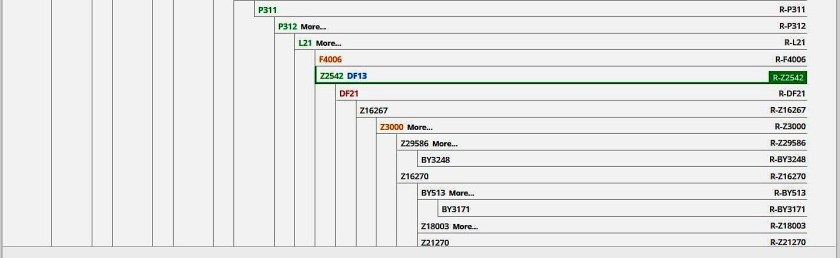
We have updated his R-Z2542 SNP’s (R1b – L21 SNP Pack) and this is what they have came back with: Your Confirmed Haplogroup is R-Z2542 – Haplogroup R-P312 is the descendant of the major R-P25 (aka R-M343) lineage and is the most common in Central Europe, Spain, France, Portugal, and the British Isles.
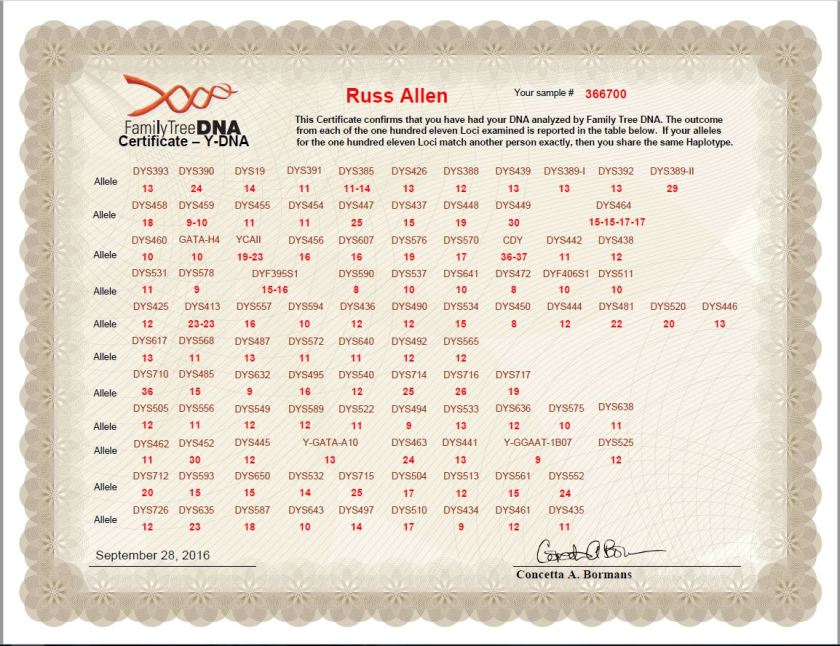
You will find all of the Y-Chromosome STR DNA haplotypes posted on the main ALLEN DNA Patrilineage 2 Project page in this haplotype chart, with copious, detailed analysis of the the DNA elsewhere on the page. One of the main points that I make in the “Principles of DNA Analysis” section is that FTDNA’s pairwise haplotype Genetic Distance numbers have only a very weak correlation with closeness of actual relationship and should be disregarded. Like so many statistics thrown at us today, not only by the ignorant media, but by scientists who need better grounding in statistics, pairwise haplotype comparisons, even across 111 markers, represent too small a sample size to yields genetics distances that are statistically significant.
You will find complete, vetted, and up-to-date ancestries of each project member on the project Descendancies page, and clicking on the project number of any member wherever it is a link, will take you to their particular ancestry on the page.
I have put hundreds of hours into building up this page, and in researching or validating the underlying genealogies, and I keep it up to date to the extent that the members keep me up to date on their research. Why not take advantage of it?
John Barrett Robb
Note from Coni: Our project number (which you can find in the project directory) in this project is A-26.This is the main Allen project I am involved in with Uncle Russ’s DNA. John has done so much work for us all and I can’t thank him enough for all he has done & continues to do~
The new FTDNA R1b-L21 SNP Pack is best described as the R1b-L21 Top-Layer and Misc Subclades SNP Pack. You could think of it as a backbone or orientation panel but it is much more of a stocky, short bush than a long backbone. This Pack is the early branching of L21, DF13, DF63, etc. A couple experimental SNPs, i.e. ZZ10, are thrown in. People with haplogroup labels R-L21, R-DF13 and R-Z2542 should definitely consider this.
What is a Single-nucleotide polymorphism via Wikipedia.org
The upper DNA molecule differs from the lower DNA molecule at a single base-pair location (a C/A polymorphism).
A single-nucleotide polymorphism, often abbreviated to SNP (pronounced snip; plural snips), is a variation in a single nucleotide that occurs at a specific position in the genome, where each variation is present to some appreciable degree within a population (e.g. > 1%).[1]
For example, at a specific base position in the human genome, the base C may appear in most individuals, but in a minority of individuals, the position is occupied by base A. There is a SNP at this specific base position, and the two possible nucleotide variations – C or A – are said to be alleles for this base position.
As Russ Allen’s Terminal SNP is Z2542 it appears you have run the Big Y for Russ Allen. I have also run the Big Y.
You might want to join the R1b Project. I also joined Alex Williamson’s special project through the R1b project.
Alex has us as DF13 – ZZ10. Not a whole lot is known about the ZZ10 subglade.
It appears our Allen group is again unique in that there are a number of DF13 folks, we are rare at the ZZ10.
It is the same with our Y – STR’s. We have a 13 at DYS426. Only 1.9% of the total population has the value 13 at that marker. Our R subgroup d is the only Allen subgroup with 13 at DYS426.
Pahke’s Cave, Hartland, Connecticut – Also known as Wright’s Cave
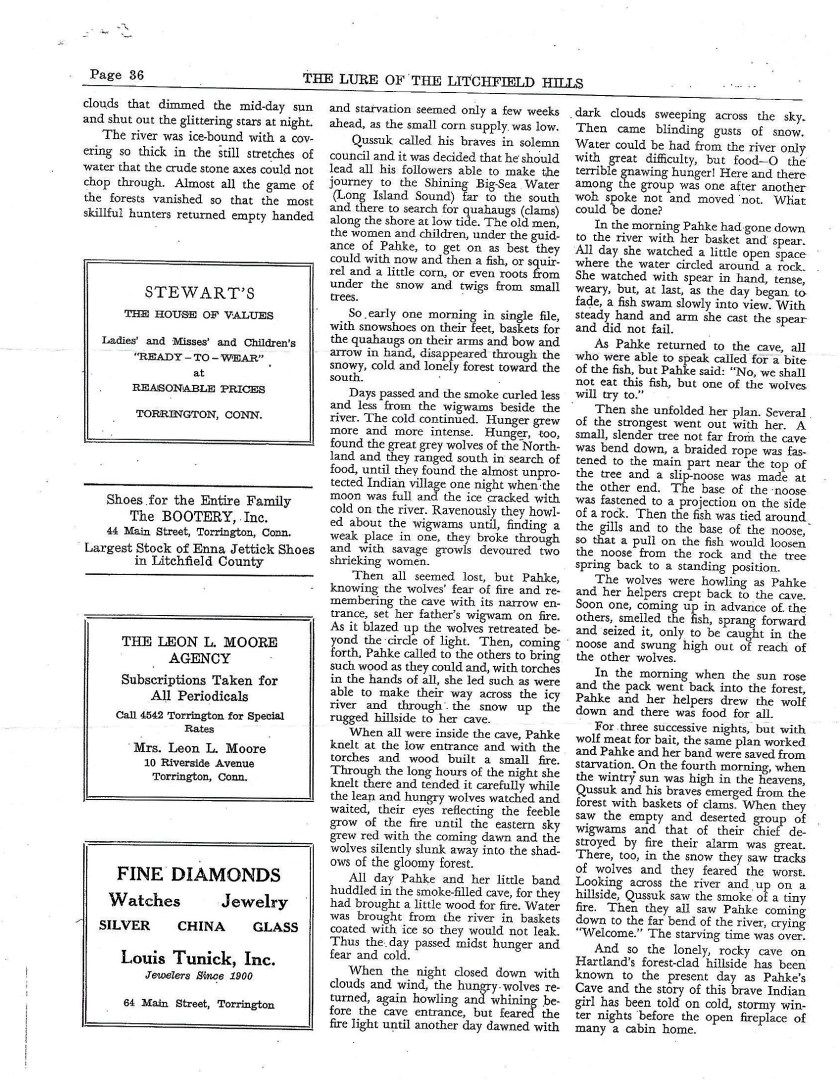
In the December issue of the Lure the story of “Pahke’s Cave, the Home of Orrin Wright,” was related as told by the late David Gaines of East Hartland.
Since that time Harold Thorne reports a number of groups have visited the ancient and historic cave. On October 24, 1941, the Clearview School from Harwinton with their teacher, Florene B. Smith, visited the cave and with them was Mrs. Elnora Snow of West Hartland. Mrs. Snow is the daughter of John Hoadley Miller who was first selectman in Hartland in 1854 when he took the children from Pahke’s Cave. Mrs. Snow related the story of the taking of the children of Orrin Wright from Pahke’s Cave as it had been told her.
“On the very day my father was elected first selectman as per final count of the votes late in the evening, the other two selectmen urged my father to get Orrin Wright’s children from the Cave at once. My father hesitated, but they finally persuaded him that he should act immediately, so, without going to his own home, he drove with his horse and business wagon over to West Hartland and as near the Cave as possible, though almost a half a mile away. He then followed the narrow trail to the Cave and as First Selectman informed Mr. and Mrs. Wright that the children must go with him as they were receiving no schooling and were receiving very poor care in such a hole. Mr. and Mrs. Wright very sorrowfully gave up the ten children and Mr. Miller took them to his home.
Now Mr. Miller had but recently been married and in addition he had not consulted his wife before he went after the children, so when he arrived with the ten, long after dark, he had two very serious problems on his hands – his wife and the ten children. Finally the children were quartered in the attic for the night. What to feed them was another problem but mush and milk solved this. In the morning John, one of the children, was goneand Mr. Miller was not to be found. After breakfast of mush and milk, Mrs. Miller decided, with her mother, to take the horse and wagon and spend the day at Hartland Fair, for Hartland had a fair of its own each year in those days. The day passed very pleasantly, but when they were ready to go home, their horse and wagon was missing.
After a very long wait Mr. Miller appeared with the horse and wagon saying he had spent the day finding homes for the children and that all but one was placed out.” Some of these children are still living as successful as others who had better opportunities when children. The water, as storms sweep the lonely hillside, has washed dirt and rubbish into the Cave so the room inside is not as large as it was one hundred years ago when Pahkeand her tribe his in its depths from the hungry wolves.
Orrin Wright and his wife found the cave a lonely home with the children gone and were soon persuaded to move into a house “made with hands.”
This area was part of the Western Lands (Goshen, Colebrook, Kent, Hartland, Norfolk, Canaan, Cornwall, Salisbury, Sharon, Torrington, Barkhamsted, Harwinton, Winchester and New Hartford) made over to Hartford and Windsor in 1686 to save them from being taken by the Royal Gov. Andros. Caleb Beach settled in this section, which was known as Green Woods, in 1750. By 1761, it was referred to as the township of Winchester. In May 1771, it was granted to be the town of Winchester.
Town vital records begin 1750.
Barbour collection records cover 1771-1858.
From The Connecticut Guide, 1935
From Torrington we enter the town of Winchester, which was laid out by Hartford in 1732. The name was taken from Winchester in England. The region was remote, and the first settler did not arrive until 1750; town privileges were granted in 1771. Winchester is a broken hill country, the elevations ranging from 700 to over 1500 feet. It is in the Greenwoods section of the State, with abundant hemlock and pine. The town is noted for its laurel display, and an annual Laurel Drive is marked out in June.
Winsted was chartered as a borough in 1856 and as a city in 1915, and in 1930 had a population of 7,883. The name was a combination of Winchester and the neighboring town of Barkhamsted. It lies in a pocket of the hills, at the junction of the Mad and Still Rivers, which supply good waterpower. The Winsted Mfg. Co. has been making scythes since 1792, probably the oldest manufacturing concern in the State. The forerunner of the Wm. L. Gilbert Clock Co. started in 1807, making it the oldest of the present clock-making establishments in Connecticut. Among other important products are electric appliances, hardware, edge tools, silk thread, hosiery and underwear
The Gilbert School, an endowed high school, lies to our right as we enter the city, at North Main St. and Park Place. Wm. L. Gilbert, who ran $300 in debt to start business, at his death left to the town over $1,000,000 in well-planned philanthropies. He was identified with Winsted from 1841 to 1890. Turning west on Main St., we pass the County Court House, Town Hall, and four fine modern churches. An old Mile Stone lies in the yard of the Methodist Church on our right. This was on the route of the old stage road from Hartford to Albany. A block west, on Lake St. at the corner of Meadow St., is the imposing Solomon Rockwell House, built in 1813, now headquarters of the Winchester Historical Society, with an exhibit of antiques. A projecting pediment is supported by 4 columns. The Barn in the rear is one of the gems of late Colonial architecture: a pediment-ed gable with semi-elliptical window, and heavy molding below the pediment and around the entire roof. There is also a small Cabin with somewhat similar treatment, except for square pillars on the corners, with Corinthian capitals. The Old Mill House, on the east side of Lake St., was built originally in 1771. The Beardsley Library, founded in 1874, stands at Main and Munro Sts., on our right.
ANNALS OF WINCHESTER, AND FAMILY RECORDS by JOHN BOYD Pg 230-231: Isaac Jacklyn came into the town this year, and resided until his death (May 13, 1834, aged 90), on a farm in Danbury Quarter, still owned by his descendants, and now occupied in part by Noah Barber. He is said to have been a servant of Secretary Wyllys of Hartford, from whom he ran away before the Revolutionary War, and took refuge in the Ragged Mountain region of Barkhamsted. Here he won the heart of a daughter of Chaugum, the head or chief of the Narragansett Indians, who held their council fire at the ” Light House,”but could not get Chaugum to sanction their marriage ; so they ran away, got married, settled down in Danbury Quarter, made baskets, and raised children, of whom John was the oldest, and lived and died (November 21, 1850, aged 58), on the paternal farm, leaving several children, among whom were Isaac of Colebrook and Samuel of Pennsylvania, or elsewhere. A daughter of Mrs. (Chaugum) Jacklyn married into the family of Elwells, who in conjunction with the Wilsons, still linger around the Light House, occasionally lighting up the old council fires.
Geographic Reference Library for Dunham Millpond Lake County: Litchfield State: CT Variant Names: Dunbar Pond, Dunham Mill Pond, Jacklin Lake
To view my Research Book on Mercy & Isaac Jacklin –Click Here
Connecticut, Wills and Probate Records, 1609-1999 – Isaac Jacklin – Part 1 of 3Connecticut, Wills and Probate Records, 1609-1999 – Isaac Jacklin – Part 2 of 3Connecticut, Wills and Probate Records, 1609-1999 – Isaac Jacklin – Part 3 of 3
Isaac Jacklin in the Connecticut, Wills and Probate Records, 1609-1999
Name: Isaac Jacklin Probate Date: 25 Mar 1830 Inferred Death Place: Connecticut, USA
Probate Place: Litchfield, Connecticut, USA Inferred Death Year: Abt 1830
Item Description: Probate Records, Vol 3-4, 1827-1845
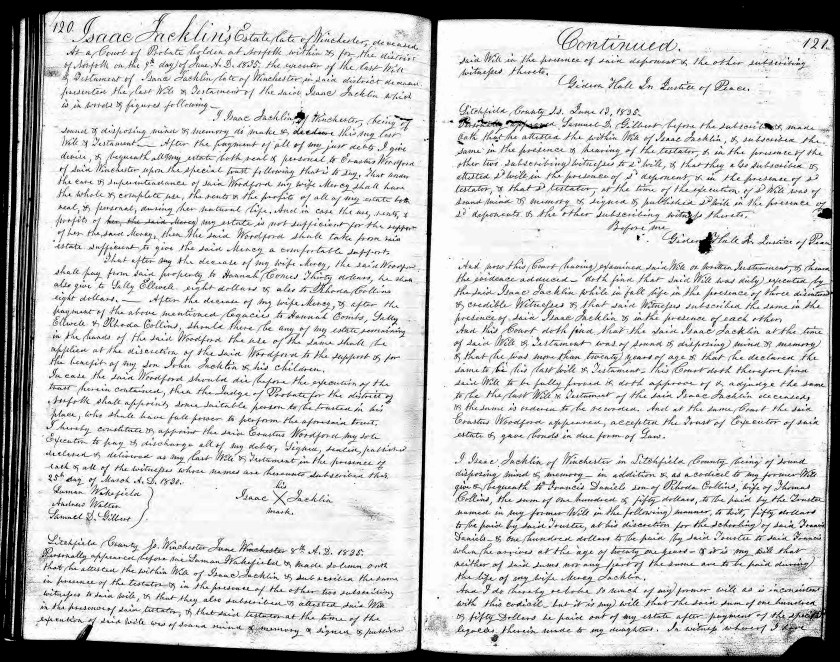
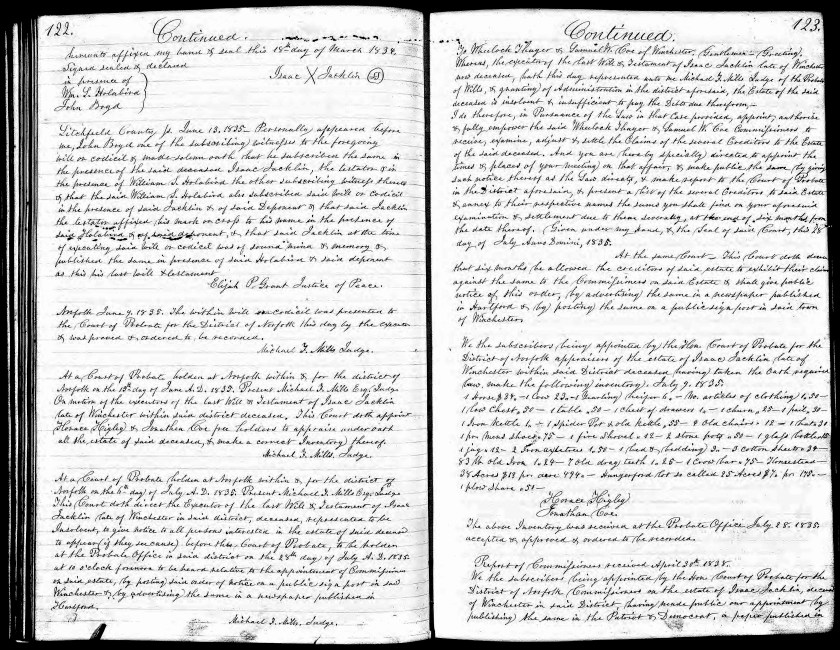
Pg 120: (left side) Isaac Jacklin’s Estate late of Winchester deceased
As a Court of Probate holder at Norfolk within & for the district of Norfolk on the 9th day of June A.D. 1835. The executor of the last Will & Testament of Isaac Jacklin late of Winchester in said district deceased presented the last Will & Testament of the said Isaac Jacklin which is in words & figured following – I Isaac Jacklin of Winchester being of sound & disposing mind and memory do make & declare this my last Will & Testament —- After the Payment of all of my just debts I give devise, & bequeath all of my estate both real & personal to Erastus Woodford of said Winchester upon the special trust following that is to say, that under the care of superintendance of said Woodford my wife Mercy shall have the whole & complete use, the rents & the profits of all of my estate both real, & personal, during her natural life. And in case the use, rents, & profits of (her, the said Mercy (crossed out)) my estate is not sufficient for the support of her the, said Mercy, then she said Woodford shall take from said estate sufficient to give the said Mercy a comfortable support.
That after (my (crossed out)) the decease of my wife Mercy, the said Woodford shall pay from said property to Hannah Combs Thirty dollars, he shall also give to Sally Ellwell eight dollars & also Rhoda Collins eight dollars. —– After the decease of my wife Mercy, & after the payment of the aboved mentioned legacies to Hannah Combs, Sally Ellwell & Rhoda Collins, should there be any of my estate remaining in the hands of the said Woodford the use of the same shall be applied at the discretion of the said Woodford to the support & for the benefit of my son John Jacklin & his children. In case the said Woodford should die before the execution of the trust herein contained, then the judge of Probate for the district of Norfold shall appoint some suitable person to be trustee in his place, who shall have full power to perform the aforesaid trust.
I hereby constitute & appoint the said Erastus Woodford my sole Executor to pay & discharge all of my debts, Signed, sealed, published, declared & delivered as my Last Will & Testament in the presence of each & all of the witnesses whose names are hereunto subscribed this 25th day of March A.D. 1830 Luman(?) Wakefield ) his Andrew Walters } Isaac (X) Jacklin Samuel D. Gilbert ) mark
Litchfield County __ Winchester (June Winchester (crossed out)) 8th A.D. 1835
Personally appeared before me Luman Wakefield & made solemn oath that he attested the within Will of Isaac Jacklin & subscribed the same in presence of the testator & in the presence of the other two subscribing witnesses to said will, & that they also subscribed & attested said Will in the presence of said testator, & that sd deponent, & in presence of said testator, & that said testator at the time of said will was of sound mind & memory & signed & published
pg 121: (right side)
said Will in the presence of said deponent & the other subscribing witness thereto. Gideon Hall In(?) Justice of Peace
Litchfield County _ _ June 13, 1835
Personally appeared Samuel D. Gilbert before the subscribed & made oath that he attested the within Will of Isaac Jacklin, & subscribed the same in presence of the hearing of the testator, & in the presence of the other two subscribing witnesses to sd will, & that they also subscribed & attested sd Will in the presence of said deponent, & in the presence of sd testator, & that sd testor, at the time of the execution of sd will was of sound mind & memory & signed & published sd Will in the presence of sd deponent & the other subscribing witness thereto. Before me Gideon Hall In(?) Justice of Peace
And now this Court having examined said Will as written Testament, & heard the evidence adduced – doth find that said Will was duly executed by the said Isaac Jacklin while in full life in the presence of three distin____ & credible Witnesses & that said Witnesses subscribed the same in the presence of said Isaac Jacklin & in the presence of each other.
And this Court doth find that the said Isaac Jacklinat the time of said Will & Testament was of sound & disposing mind & memory & that he was more than twenty years of age & that he declared the same to be his last will & testament. This Court doth therefore find said Will to be fully proved & doth approve of x adjudge the same to be the last Will & Testament of the said Isaac Jacklin deceased, & the same is ordered to be recorded. And at the same Court the said Erastus Woodford appeared, accepted the Trust of Executor of said estate & gave bonds in due form of Law.
I Isaac Jacklin of Winchester in Litchfield County being of sound disposing mind & memory – in addition & as a codicil to my former Will give & bequeath to Francis Daniels son of Rhoda Collins, wife of Thomas Collins, the sum of one hundred & fifty dollars, to be paid by the Trustee named in my former Will in the following manner to wit, fifty dollars to be paid by said Trustee, at his discretion for the schooling of said Francis Daniels – & one hundred dollars to be paid by said Trustee to said Francis when he arrives at the age of twenty one years – & it is my will that neither of said sums nor any part of the same are to be paid during the life of my wife Mercy Jacklin.
And I do hereby _____ so much of my former will as is inconsistent with this codicil – but it is my will that the said sum of one hundred & fifty Dollars be paid out of my estate after payment of the Specific legacies therein made to my daughters. In witness whereof I have
pg 122: (left side) Hereunto affixed my and & seal this day of March 1834 Signed sealed & declared in presence of } Isaac (X) Jacklin Wm. S. Holabind } John Boyd }
Litchfield Country __ June 13, 1835 –Personally appeared before me, John Boyd of of the scribed witnesses to the foregoing will on codicil & made solemn oath that he subscribed the same in the presence of the said deceased (crossed out) Isaac Jacklin, the testator & in the presence of William S Holanbind the other subscribing witness thereto & that the said WIlliam S. Holabind also subscribed said will or codicil in the presence of said Jacklin & of said Deponent & that said Jacklin the testor affixed his mark on crop to his namein the presence of said Holabind & of said deponent & that said Jacklin at the time of executing said will on codicil was of sound mind & memory & published the same in presence of said Holabind & said deponent as this his last will Testament Elijah P. Grant Justice of Peace
Norfolk June 4, 1835. The within will & codicil was presented to the Court of Probate for the District of Norfolk this day by the executor & was proved & ordered to be recorded. Michael F Mills Judge.
At a Court of Probate holden at Norfolk within & for the district of Norfolk on the 15th day of June A.D. 1835. Present Michael F. Mill Esq. Judge On motion of the executors of the Last ill & Testament of Isaac Jacklin late of Winchester within said district deceased. This Court doth appoint Florance Higley & Jonathan Coe free holders to appraise under oath all the estate of said deceased, & make a correct Inventory thereof. Michael F Mills Judge.
At a Court of Probate holden at Norfolk within & for the district of Norfolk on the 6th day of July A.D. 1835. Present Michael F. Mills Esq. Judge
This Court doth direct the Executor of the last Will & Testament of Isaac Jacklin late of Winchester in said district, deaceased, represented to be Insol___, to give notice to all persons interested in the estate said deceased to appear (if they see cause) before this Court of Probate, to be holden at the Probate Office in said district on the 28th day of July A.D. 1835 at 10 o’clock forenoon to be heard relative to the appointment of Commission on said Estate, by posting said order of notice on a public sign post in said Wincester & by advertising the same in a newspaper published in Hartford. Michael F Mills Judge.
pg 123: (right side) To Wheelock Thayer & Samuel W. Coe of Winchester. Gentleman Greeting.
Whereas, the executors of the law Will & Testament of Isaac Jacklin late of Winchester now deceased, hath his day represented unto me Michael F. Mills Judge of the Probate of Wills & granting of Administration in the district aforesaid, the Estate of the said deceased is insol___ & insufficient to pay the Debts due therefrom, —
I do therefore, in Pursuance of the Law in that Case provided, appoint, _____ & fully empower the said Wheelock Thayer & Samuel W. Coe Comissioners to recieve, examine, adjust & settle the Claims of the several Creditors to the Estate of the said deceased. And you are hereby specially directed to appoint the times & places of your meeting on that affair, & make public the same by giving such notice thereof as the Law directs, & make report to the Court of Probate in the District aforesaid, & present a list of the several Creditors to said Estate & annex to their respective names the sums you shall find on your aforesaid examination & settlement due to them severally, at the end of six months from the date thereof. Given under my hand, & the Seal of said Court, this 28 day of July Anno Domini, 1835. At the same Court – This Court doth decree that six months be allowed the creditors of said estate to exhibit their claim against the same to the Commissioned on said Estate & shall give public notice of this order, by advertising the same in a newspaper published in Hartford & by posting the same on a public sign post in said town of Winchester
We the subscribed being appointed by the Hon. Court of Probate for the District of Norfolk appraisers of the estate of Isaac Jacklin late of Winchester within said District deceased having taken the Oath required law, make the following inventory. July 9, 1835
1 Horse $34. – 1 Cow 23,, – Yearling heifer 6. – Mo. articles of clothing 1.50 – 1 Cow Chester .50 – 1 table .50 – 1 Chest of drawers 1. – 1 Churn ,,25 – 1 pail ,,30 – 1 Iron kettle 1,, – 1 spider Pot & old kettle .55 – 4 Old chains ,,12 – 1 hat ,,31 1 pair of mens shock .75 – I fine shovel ,,12 – 2 stone pots ,,50 – 1 glass bottle ,,15 1 jug ,,12 – 2 Iron axletrees(?) 1.50 – 1 bed & bedding 3,, – 3 cotton sheets ,,34 – 83 lbs of old Iron 1,,24 – 7 old drag teeth 1,,25 – 1 Crow bar ,,75 – Homestead – 38 acres $13 per acre 494. – Hungerford lot so called 25 Acres $7 pr. 175,, – 1 plow share(?) ,,51 –
Horace Higley
Jonathan Coe. The above Inventory was received at the Probate Office July 28, 1835 accepted & approved & ordered to be recorded.
Repost of Commissioners received April 30th 1838
We the subscribed being appointed by the Hon Court of Probate for the District of Norfolk Commissioners on the estate of Isaac Jacklin, deceased of Winchester in said District, having made public our appointed by publishing the same in the Patriot & Democrat, a paper published in
pg 124: (left side)
Hartford, & also on the sign post in Winsted that we would attend to the business of our appointment at the store of Coe, Hubbell & Co. on the fourth Monday of August 1835. & on the fourth Monday of January 1836 at one o’clock P.M. on each of said days, having taken the oath necessary by law, do find the following sums due to the respective persons opposite of their several names —
Lewis Allen $4.14 John Benedict $3.19
Doct. Geo. O. Jarvis 3.92 Town of Winchester __.00
Doct. Truman S. Wetmore 10.25 Hannah Jacklin 75.00
Coe, Hubbell & Co. 4.41 James Humphrey}
Doct. L Wakefield 6.54 Balance of ___ } 93.93
Platt Andrews 2.09 Advertising 75
Samuel D. Gilbert 1.75 fees 600 ____6.75
Charles Humphrey 1.10 $245.39
Anson Platt 1.08
Doct. Benj Welch In 19.26 Wheelock Thayer} Adjourned(?) from the fourth Monday Samuel W. Coe } Commissioners
of Aug 1836 to meet on Monday Feb 1st 1836. Present Michael F. Mills Judge. On application of the Executor of the last Will & Testament of Isaac Jacklin late of Wincester in said District deceased showing at this Court that the debts & expense of settling the Estate of the said Isaac Jacklin deceased, exceeds the amount of the personal property to the amount of One hundred & forty dollars & praying this Court to authorize & empower them to sell real Estate sufficient to raise that sum with incidental charges of Sale, & this Court having inquired into the truth of the same do find them true, Whereupon this Court doth authorize & empower the said Executor, to sell at public sale, so much of the real estate as will raise the said sum of One hundred & forty dollars together with incidental charges of sale, & said Executor will cause notice to be given of the time & place of Sale by advertising the same in a paper printed in Hartford & make return to whom sold with charges of sale.
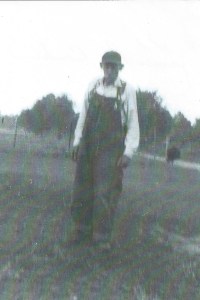
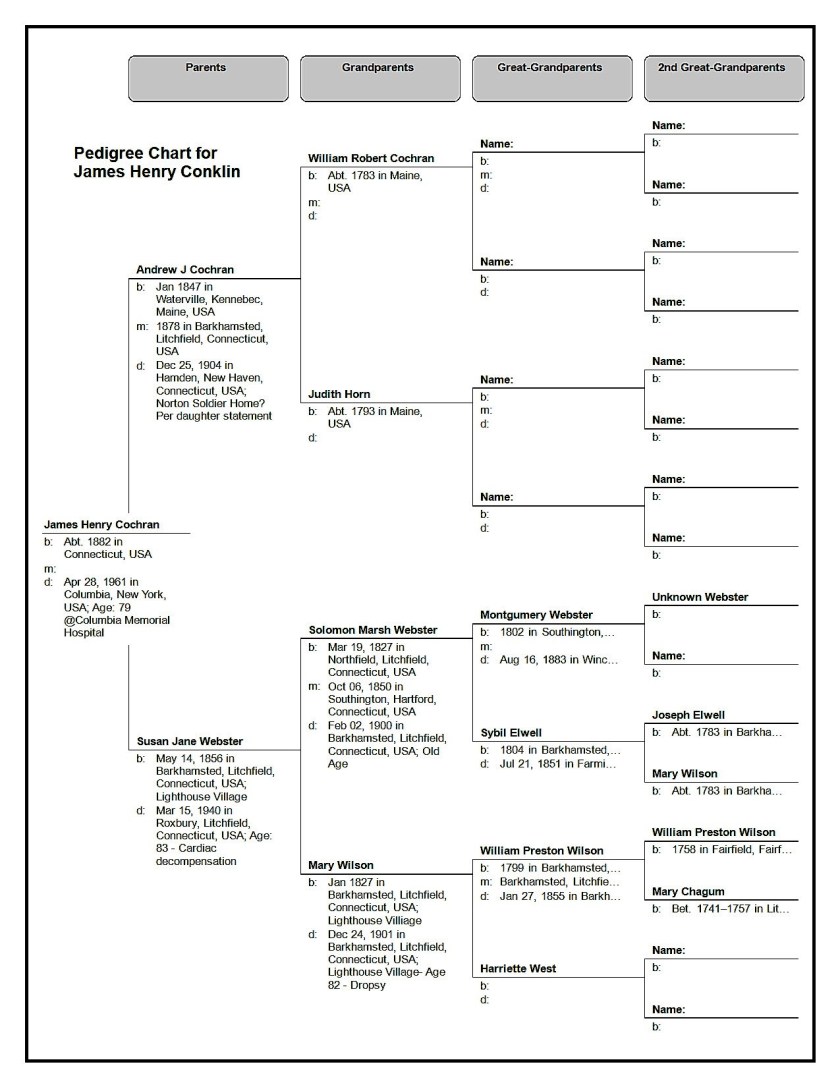
James Cochran (later changed his name to Conklin) Barkhamsted Descendant
Note from Coni: I spoke with Kathy (Messenger) Melody today and has a close family connection to James (She also donated photo above – she had of James) – She filled in the blanks as best she could – Her Uncle told her at one time that James changed his name due to hiding from wife’s ex (Anna Edna (Fox) Tyler, Cochran/Conklin) – main reason they moved to New York and then changed their names to Conklin from that point on! The only 2 descendants I can find is that of James and Anna who had 2 sons (Gertrude’s line would not be descent) Francis Andrew & Henry JamesConklin.
From: Jan Tyler <jan.tyler@att.net> To: ‘Kathy Melody‘ <krsgram45@yahoo.com> Sent: Sunday, January 11, 2015 6:12 PM Subject: RE: Aunt Annie Death Hi Kathy, Thank you for your email and the additional information and photos. My connection to her is from my father, Warren E. Tyler who was her oldest son she had with George W. Tyler, her first husband. Annie/Anna married George Tyler on April 20, 1907 and had four children with him. Ethel, Warren (my father), Gertrude and George Raymond. You know Gertrude and George as Conklin, but they were legally born Tyler. They were a family living in Springfield Massachusetts until 1918. Sometime in 1918, Annie’s/Anna ‘s marriage to George fell apart and she left George taking Gertrude and George with her where she ended up in Torrington Connecticut as a house keeper for James Cochran now Conklin. Since Annie/Anna had left and her husband George was unable to care for my father and his older sister, Ethel, they were rescued by the Hampden County Children Aid Association and made wards of the state of Massachusetts in 1919. My father and my Aunt Ethel spent their childhood in foster care until 1929. Jan Tyler
(All newspaper’s donated by: Susan Shepard )
April 4, 1935 – Chatham Courier – Chatham, NY Pays $15 After Guilty Verdict James Conkin, Lebanon Springs, Given Jury Trial.
New Lebanon Grange Hall was packed to the doors Friday evening for the trial by jury of James Conklin, of Lebanon Springs. Conklin was arrested the night of March 22, by Corporal James Rose, of the State Police, on a charge of violation of the automobile traffic laws, it being alleged he operated his car with defective lights. When arraigned before Jude A. Ross Rider, Conklin requested a jury trial, hence the hearing Friday evening. Opening of the case was delayed about fifteen minutes, pending the arrival of Harold V. A. Drumm, of Chatham, attorney for the defendant. The state’s case was handled by Corp. Rose, assisted by Tooper Hillfrank, of the Petersburg patrol. Attorney Drumm had much difficulty acquiring a jury satisfactory to him and much time was taken up by the selection of the jury. The whole panel as drawn was soon exhausted and it became necessary for Judge Rider to select jurymen from eligible persons on hand as spectators. Trooper Rose testified for the plaintiff, and witnesses for the defense were the defendants and Wibur H. McKern. Following the taking of testimony, Attorney Drumm summed up for the defense and Trooper Hillfrank for the state, following which the jury retired to consider the case. After deliberating well into the second hour, the jury returned with a verdict of “guilty” and the defendant was fined $15.00 by Justice Rider. The jury as finally chosen was, Thomas Schell, Edward J. Flinn, Arthur C. Cartlton and Wilson Cole.
Oct. 19, 1939 – Chatham Courier – Chatham, NY Two Given 30 Days for Red Rock Larceny Suspended Sentence to Third for Theft of Metal
Three Red Rock men last week took the hard way to earn $5 and as a result two of the trio have thirty days in which to think it over their shortcomings, in the county jail, and their father, the third of the party, can do his thinking under suspended jail sentence for the next six months. James Conklin and his two sons, Francis and Henry, all of Red Rock, were charged by Joseph Dudoire(?), with petit larceny and after their arrest by Trooper J. J. Mirklas, of the New Lebanon State Police outpost, were arraigned before Justice of the Peace W. J. Spence of Spencertown, who meted (?) out the sentences. All three, according to authorities pleaded guilty to having gone to the Dudoire (?) Farm, in the Red River section, and dismantling various pieces of farm machinery. The ______ _______ (?) netted about 500 pounds of iron which the men trucked to Troy and sold for a ______(?) $5. The trip to Troy is estimated to have cost the thieves at least $1 for gasoline, leaving a possible net of $4, not considering the time spent. Judge Spence pointed out the fact that all three of the men could have found employment picking apples for which they would have been paid 5 (or 50 ? ) cents per hour and thereby each could have made as much, honestly, as the three made and quickly lost on their “hot junk.”
March 28, 1940 – Chatham Courier – Chatham, NY Red Rock
Mr. and Mrs. James Conklin attended the funeral of his mother, Mrs. Susan Humphrey, of Roxbury, Conn., last Monday.
Oct. 10. 1940 – Chatham Courier – Chatham, NY Brainard Station
James Conklin with his 3 sons and Charles Ashley are picking apples in Livingston.
Mar 22, 1945 – Chatham Courier – Chatham, NY Court to Rule On Jury Award Against Former Co. Official Dr. Louis Van Hoesen Is Defendant In Court Action
Supreme Court Justice William H. Murray of Troy, Yesterday reserved decision on a defense motion to set aside a $3,000 Albany County Supreme Court jury award in favor of James Conklin of McKnownsville, formerly of Lebanon Springs, against Dr. Louis Van Hoesen, former Health Commissioner of Columbia County. Mr. Conklin charged that he was committed to the Hudson River State Hospital at Poughkeepsie on Dr. Van Heusen’s certification that he required mental care. Conklin contends he was of sound mind. Deputy, sheriff Lloyd Church of Lebanon, as also named a defendant, but the jury returned a verdict of no cause for action against Church. The move to set aside the verdict was based, in addition to the usual grounds, on the grounds that the court attendant had informed members of the jury that separate verdicts could be returned.
May 4, 1961 – Chatham Courier – Chatham, NY James Conklin Is Dead At 79
James H. Conklin, 79, a resident of Pulver Station, Town of Ghent, died April 28 at Columbia Memorial Hospital. A native of Richmond. Me., he had spent the greater part of his life in Columbia County. Mr. Conklin was a retired saw mill operator. He is survived by his wife, Anna Johnson: three sons, Francis and Henry of Mellenville, and George of Elmhurst, L. I.; a daughter, Mrs. Gertrude Winters, Valatie; a brother, Robert. Waterbury, Conn.; a sister, Mrs. Flossy Johnson, Washington, Conn., and 12 Grandchildren. Funeral Services were held Sunday afternoon at the J. A. French Funeral Home. Chatham, with Rev. Oscar Arnold officiating, Intermets was in Cemetery of the Evergreens, New Lebanon.
Note from Coni: I found no Find A Grave for James – so created one and linked him
Find A Grave #: 162589560
Burial
Stephentown Historical Society – Grave Records · NL002 Evergreens Cemetery Conklin, Blanche __/___/1910 ca – 26/JAN/1978 – 31 – U Conklin, Grace C. 17/JUL/1898 – 21/JUL/1951 Conklin, James __/___/1882 – __/___/1961 Conklin, John L. __/___/1901 ca – 28/JUL/1978 – 52 – s http://stephentown-historical.org/cardfile/cem_lists/nl002list.html
Coni’s Note: I want to thank Susan Shepard for finding all these newspapers for us while on other Chagum research we are working on together. She happened across these and wanted to share. Susan is a professional researcher and is a very, very busy lady, I am truly honored she helps when she can, where she can. (she is amazing and I’m learning so much from her). Due to her high volume of work she is unable to personally answer any questions – please direct them to me and I will address them to her if need be. She is working on Samuel Chagum for us and has done a tremendous amount of work also on what happen to Mary (Molly) after James had passed and will be putting it all together for us when she completes what she needs to do with original 18th and 19th century records from several Connecticut towns.
Keep in mind: Susan is doing the hands on research for us – visiting sites, town records vaults and historical societies.
This site is dedicated to the ancestors of the Johnson, Booker and Petruff families of Rhode Island, Connecticut and Pennsylvania and thier connecting lines of lineage.











 Ever Widening Circle