Posted in Coni Dubois, Coni's Stuff, Tribal

2026 Native American record releases and how to use them for research

This spring two major things happened at once. FamilySearch pushed a huge batch of new and re-indexed records in its April 2026 update, over one billion records total, and inside that update was an expansion to the core Native collection: United States, Native American, Census Rolls, 1885-1940. At the same time the National Archives and Records Administration has been finishing a multi-year push to get Bureau of Indian Affairs records out of the basement and online, including a new BIA Photographs Finding Aid and near-complete digitization of the most-used BIA microfilm publications in Record Group 75.

The center of all of this is NARA microfilm publication M595, Indian Census Rolls, 1885-1940. It is 692 rolls of annual censuses that Indian agents were required to file after an Act of Congress on July 4, 1884. This is not the regular federal census. This is the reservation census taken every year, often on June 30. If your ancestor was enrolled and living on or near a reservation, they should be in M595. The information changes by year. Early years are just name, age, sex. By the 1920s and 1930s you often get English name and Indian name, roll number, age, sex, relationship to head of household, marital status, degree of blood, and sometimes allotment or residence notes. NARA now has these rolls digitized in its Catalog as Indian Census Rolls and they are also on microfilm as M595, and copies are on FamilySearch, Ancestry and Fold3.

FamilySearch also maintains state-specific slices of the same film, most notably Washington, Native American, Census Records, 1880-1952. If you have Northwest ancestry it is worth searching both the national collection and the Washington collection because indexing was done at different times and a name that is missing in one can appear in the other. The national collection recently had 112 newly indexed entries added, which sounds small but each entry unlocks a full page of relatives.

There is a second collection that most people miss: United States, Native American Birth and Death Records, 1885-1940. This is the birth and death supplement that was filed with the annual rolls, especially for 1925 to 1933. When it is present it gives you census roll number, surname and given name, date of birth or death, sex, tribe, ward status, degree of father’s blood, degree of mother’s blood, degree of child’s blood, and whether the person was at the jurisdiction where enrolled. For western reservations like Western Navajo this supplement is often on roll 644 and similar rolls.

The NARA side is equally important. NARA has said that digitization of the most heavily used BIA microfilm publications in RG 75 is about 95 percent complete, including records that used to be held in Anchorage for Alaska Natives. That includes school censuses, allotment records, and annuity rolls. In early 2026 NARA also expanded its BIA Photographs Finding Aid, which finally brings together photos that were scattered across regional facilities. You can now search by tribe, school, or agency. For boarding school history, the National Indian Boarding School Digital Archive is building a parallel portal and so far offers records from nine schools including Chemawa, Carlisle Indian Industrial School, Cushman Indian School in Tacoma, and Pipestone Indian School. NARA itself also holds school land and building records and maps that can help you pinpoint where a school was and what records might exist for it.

How to use it all together in practice. Start with one solid hit in M595. Write down the agency name exactly as written, the year, the roll number, and the page number. Then browse that same agency three years before and three years after. Agents kept families in the same order year to year, so you can track births, deaths, and marriages even when the index fails. Pay attention to the roll number column. A sudden new number often means marriage to someone from another family or enrollment from another agency. Note the remarks column, it often says died, married, transferred, or dual enrollment.

Once you have a cluster of years, pull the birth and death rolls for that agency. That gives you exact dates and parental blood degree, which you will need for lineage packets. Then go to NARA’s Indian Census Rolls page and its tribal rolls overview. If your family is one of the Five Civilized Tribes in Indian Territory before 1907, M595 is just a clue. You will need to go to the Dawes Commission Final Rolls and enrollment cards. For almost every other tribe, you will want to use the agency and years you found to ask for that tribe’s base rolls, allotment rolls, and other enrollment lists in RG 75. The government has never created one master list of all Native Americans, so you have to work agency by agency.

For organizing and sharing, make a simple packet per ancestor. One folder with all M595 images for that person across years, one image of the birth or death roll, any BIA photo or school attendance record, and a full citation that reads NARA M595, Indian Census Rolls, 1885-1940, roll number, agency, year, and line or family number. Tribal enrollment offices and family members both want the citation, not just a screenshot.

Finally, search the same name in three places. FamilySearch search, the NARA Catalog, and Ancestry or Fold3 free at a library or NARA facility. All three use the same M595 film but different handwriting interpretations. If you search all three you will find about twenty percent more relatives that one index alone would miss. If you have a surname and a state or a suspected tribe, start with M595 and then layer the birth and death rolls and the photo finding aid. That combination is what makes the 2026 releases so powerful.

Core Links:


1. FamilySearch April 2026 overview listing the United States Native American Census Rolls 1885-1940 as an expanded collection: https://www.familysearch.org/en/newsroom/new-free-historical-records-from-31-countries-april-2026-update

2. Detailed list of April 1-30 2026 new and updated collections on The Ancestor Hunt which mirrors FamilySearch release notes: https://theancestorhunt.com/blog/familysearch-new-and-updated-collections-april-1-30-2026/

3. FamilySearch collection page for United States Native American Census Rolls 1885-1940 collection ID 2761958 which is NARA microfilm M595: https://www.familysearch.org/search/collection/2761958

4. FamilySearch collection page for United States Native American Birth and Death Records 1885-1940 the supplement that gives blood degree and birth dates: https://www.familysearch.org/search/collection/3008100

5. NARA main page for Indian Census Rolls 1885-1940 explaining M595 is 692 rolls and how to access the digitized series in the National Archives Catalog: https://www.archives.gov/research/native-americans/census/1885-1940

6. NARA guide to Bureau of Indian Affairs Records Tribal Rolls Record Group 75 explaining that there is no single master list and rolls were created by agency: https://www.archives.gov/research/native-americans/rolls

7. NARA article Increasing Access to Native American Records describing the new BIA Photographs Finding Aid: https://www.archives.gov/calendar/society-of-american-archivists-article-increasing-access-to-native-american-records

8. NARA guide to BIA Boarding School Records including land and building records and where maps are held: https://www.archives.gov/research/native-americans/bia-guide/boarding-schools

9. NARA other Indian School Records list with sample entries like Sisseton Agency School Attendance Records 1922 and notes about photographs through the BIA Photographs Finding Aid: https://www.archives.gov/research/native-americans/bia-guide/other-indian-school-records

10. For general context on M595 use and the 1884 law requiring annual agency censuses: https://www.archives.gov/research/native-americans/census/tutorial

12. If you want to browse all FamilySearch Native American resources in one place: https://www.familysearch.org/en/wiki/United_States_Native_American_Records

Posted in Coni Dubois, Coni's Stuff

LINEAGE LOG – DUBOIS KINSHIP PRESERVATION SERIES


The document “LINEAGE LOG – DUBOIS KINSHIP PRESERVATION SERIES.pdf” is a comprehensive genealogy workbook created by Coni Dubois.

It is designed as a professional working archive to meticulously document family history. The workbook provides structured templates for recording a wide variety of genealogical data, from basic relationships and vital records to oral histories, migration patterns, property ownership, military service, and family artifacts.
Key Features and Organization

The file contains a Master Index that outlines 26 distinct, purpose-driven worksheets to help researchers organize their findings.

The major categories include:
* Core Ancestral Profiling: Includes individual biographical data, vital record analysis and mapping, ancestral profiles, and a master family profile for lineage reconstruction.
* Family and Household Reconstruction: Features dedicated logs for spouses and unions, children of those unions, grandchildren summaries, and household census extractions.
* Research and Evidence Tracking: Provides structured sheets for a master source and citation log, an evidence review and lineage proof summary, and a log for research notes and findings.
* Historical and Cultural Context: Contains an ancestor profile deep-dive for narrative biographies, migration and movement logs, and a dedicated worksheet for family legends and oral histories.
* Specialized Historical Records: Includes highly specific templates for logging land and property records, military service data, occupation and skills profiles, community and social standing, medical and health histories, religious and spiritual life, and economic and financial profiles.
* Artifact and Media Preservation: Features an heirloom and artifact catalog, as well as a two-part photographic record index to catalog family objects, provenance, and historical images.Each worksheet is designed with verification checklists at the bottom to ensure all sources are cited, dates are verified, and relevant data is fully confirmed.

TO DOWNLOAD: Click Here

Posted in Coni Dubois, Coni's Stuff

🌳 Genealogy Friends! 📜
I created this Tips for Beginning Genealogists graphic to help anyone starting their family history journey. Genealogy can feel overwhelming at first, but a few good research habits can make all the difference!

Feel free to save it, share it, and pass it along to anyone learning about family history. The more we help each other, the more stories we preserve for future generations.

Remember:
✨ Record your facts
✨ Cite your sources
✨ Look for patterns
✨ And always follow the records!

Happy ancestor hunting!
— Coni
Visit: www.conidubois.com

Posted in Coni Dubois, Ken Feder

100th Anniversary of People’s State Forest Oct 6th, 2024

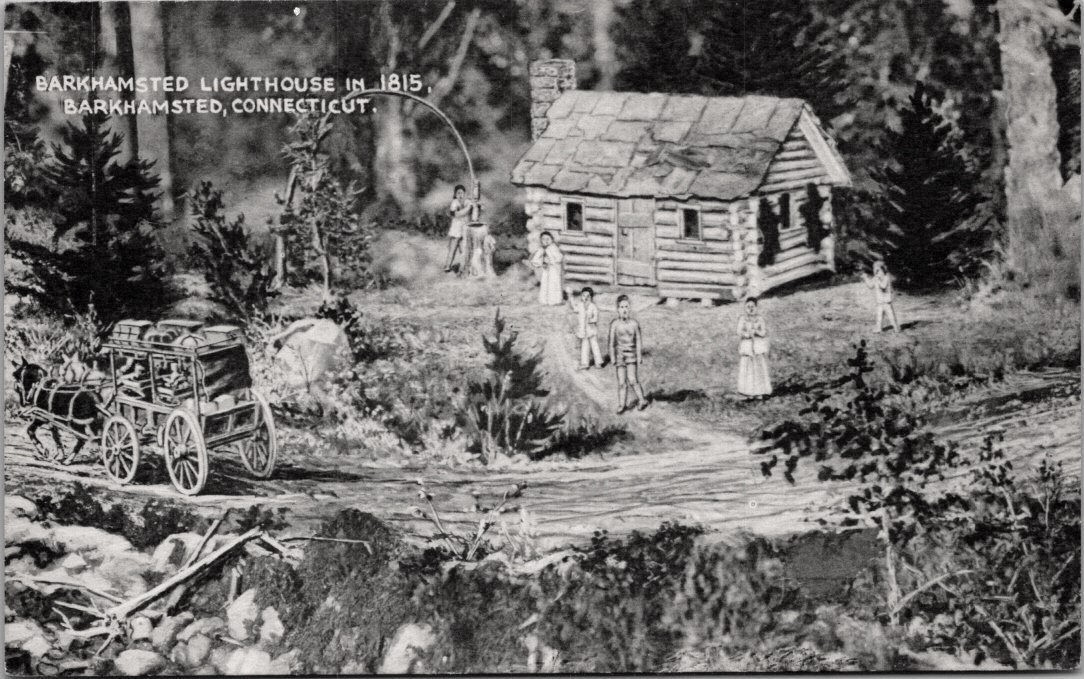
Celebrating the 100th Anniversary of People’s State Forest in Barkhamsted, Connecticut is home to three of the state’s designated State Archaeological Preserves. Ken Feder directed the excavation of two: the metaphorically named Lighthouse community and the 2,850-year-old Walter Landgraf Soapstone Quarry.

On Sunday, October 6th, at Matthies Grove in Peoples State Forest, East River Road, Barkhamsted, FALPS and the State of Connecticut celebrated the true essence of the “Peoples” State Forest. Attendees delved into its founding, participated in forest-related activities, watched oxen pull logs to a portable sawmill and observed the loggers milling the wood. They enjoyed a chain carving contest and witnessed dignitaries plant a ceremonial tree, among many other engaging events.

Both Robert Starr and Ken Feder remarked that it was a splendid day filled with beauty and history.

FALPS : FALPS is a group that works diligently and tirelessly to improve our forests, keep the trails clear, build bog bridges and boardwalks and fun year-round hikes and events to benefit those who visit the area.

Note: I’ll add any newspaper article links or photos of the event as they come in. Unfortunately, I couldn’t make it to the event, but I can’t wait to see all the photos taken.

CT Visit & ct.org

L2R: Sites Archeologist Ken Feder &
Light House Descendant Robert Starr
Photo credit: Ken Feder
L2R: Ken Feder & Ginny Apple
L2R: Ginny Apple & Robert Starr – Photo credit: Robert Starr
Ken Feder Photo credit: Robert Starr
Display by: Ginny Apple (based off archeological places of site)
Photo credit: Robert Starr
Posted in Coni Dubois, Coni's Stuff

Interested in checking out my YouTube channel? I’d love for you to take a look!

Photo AI created/generated @conidubois

To view:

Coni Dubois YouTube Channel

As I prepare for the Barkhamsted Lighthouse Gathering, which marks its 10th year since its inception, I am also revamping and modernizing my various social media channels. My goal is to streamline all of my content and make it easily accessible. Additionally, I am working on creating new research materials for the upcoming occasion.

With that said, I have tons to share and more stories to tell and looking forward to catching up with everyone.

🤗 Coni

Posted in Sherry Lyn Carsten

Reclaiming our Native American Culture…

I have known my whole life that my maternal grandmother had Native American ancestry. When I was a teenager my US History teacher gave us some extra credit work of creating a family tree. So I went to my grandmother and asked her to share what she knew.

This image has an empty alt attribute; its file name is 6319a286-b77f-4bc8-b83d-35ea76fb264a.jpg
Ruth Ann, Edith and Sherry (unknown date)

Her grandfather was Frederick Roy Webster. And he claimed to be the grandson of an Indian Chief in a newspaper article about their wedding anniversary as well as his obituary. He was the son of Solomon “Ol Sol” Webster and Mary Wilson (Though his death certificate states his mother was Sarah Charugn, which is completely wrong). As stated in a previous blog, Solomon was the son of Montgumery “Gum” Webster of Mehegan descent. Mary Wilson was the daughter of William P. Wilson Jr and Harriet Wilson. William was the grandson of James Chagum (of Narragansett descent) and Molly/Mary Barber, of the Lighthouse Village in Barkhamsted, Connecticut.

This image has an empty alt attribute; its file name is 38092bbf-7f73-495c-a8c5-07bafe80d6c6.jpg
Fred Webster Family
(I got the photo from my grandmother Edith Webster Lash (daughter of Bert), she told me that this was her father’s family on the day of her mother’s funeral (July 1921) it was with other photos of Berts girls with their cousins, Nora’s daughters. Grandma had all the names right except for Almo & Bryon Judson Price, I sent this photo to Onalee Ordiway Potter (Byron’s granddaughter) & she named the people. Also the date on the photo says “OCT 56” this can’t be, since both Mary & Fred Webster died in 1942)

…Some in Michigan are Living…

Calling me back “home,” beckoning me is a little piece of land. Ironically it is called Barkhamsted Lighthouse. I ponder the inhabitants of the Lighthouse “Tribe” even thought what it’s name would mean to those coming after them. To me it is a beacon deep in my heart. A passion that was my mother’s and my grandmother’s to stand where the Websters & Chagum’s once stood. To see the old cemetery & foundations of the homes, that are barely noticed today. To somehow feel their presence from the past. To visit the town’s Historical Society and Records vault, to find my ancestors name in some forgotten record.

This image has an empty alt attribute; its file name is lighthousevillage.jpg
Photo from The Legend of Barkhamsted Light House, by Lewis Sprauge Mills, (Lewis Sprauge Mill, publisher. Barkhamsted, CT).

In Lewis S. Mills book, “The Legend of the Barkhamsted Light House” page 93 he writes…

“Molly Barber and James Chaugham
Dead and Buried-gone forever:
Scattered now are their descendants.
Some are in the Town of Woodbury
Busy digging graves and hunting;
Some in Riverton and Colebrook
Some in Harwinton and Winsted,
Some in Michigan are living.

… Generations speeding onward
In an ever widening circle,
Carry far the blood of Chaugham
And his spouse, brave Molly Barber…”

My family are part of that “…SOME IN MICHIGAN ARE LIVING….”

During my childhood my mom and my grandma always tried to find out more about our ancestors and our culture. We went to a couple of Pow-Wow’s here in Saginaw area of Michigan and I was mesmerized by the drums and dancers. When I was older some Native American singers called Rain Song came to the church we were attending and played. That is where I came up with the name to my blog “Echo’s of Lost Footprints.”

Fred & Mary’s marriage record below…

This image has an empty alt attribute; its file name is 41326_342407-00387.jpg

I found a quote somewhere on the web that I wrote down, “We will be known forever by the tracks we leave!” I believe this is a call to arms for me. I believe it’s the echo’s of my ancestors that are calling out for me to find them & learn about the “tracks” they left for me to find. Also, it’s a challenge for us, to leave a legacy for our children, grandchildren & beyond… a legacy of purity, wholesomeness of heart & bravery.

In March our local library was part of the One Book Shiawassee, is a Community Read effort with the goal to invite Shiawassee County residents to collectively read the same book at the same time. We read FIREKEEPERS DAUGHTER by Angeline Boulley, and I got to see/hear her at an authors event hosted by One Book Shiawassee.

Some other events were the Deer Hide bracelet craft with Reg Pettibone, a member of the Ho-Chunk Nation, he shared with those attending about deer and the cultural significance to village life and Native American culture. And later Reg, along with his wife Marca, from the Paiute Nation, & their daughters presented a unique and engaging cultural performance that amazes, entertains and educates. Reg, draws on his traditional upbringing to provide the audience with a better understanding of true native culture through dance, song, stories and audience participation. Here are some photos I took during these events.

This image has an empty alt attribute; its file name is 433001183_10161338254044507_1841892462981541788_n-2-edited.jpg

Here is my daughter, Shelbi with Reg Pettibone after the Deer Hide Bracelet Craft event (I didn’t realize his eyes were shut). She was so proud to learn about the Native culture. My ancestors were Mohegan and Narragansett, so things would be different with some similarities.

Logos above are the Narragansett & Mohegan Tribes logos.

Much Love from Michigan, Sherry Lyn

Posted in Coni Dubois

Barkhamsted Lighthouse Village is now a part of the Witness Stones Project

The Witness Stones Project is a non-profit educational initiative whose mission is to restore the history and honor the humanity of the enslaved individuals who helped build our communities.

  • In Sept 2023 I was contacted by Historian Paul Hart of Barkhamsted Historical Society about the Barkhamsted Lighthouse Village being featured in one of the Witness Stone projects.
  • Paul Hart was in touch with one of the project leaders and included them in our email correspondence. Shortly after, I received a message from Laura McCarthy Ed.D., the Director of the Academic Success Center. Having recently visited the Lighthouse site, she expressed interest in learning more about the village and its inhabitants. She asked if I would be willing to assist with the project. Without hesitation, I gladly agreed to help in any capacity needed.

The Witness Stones Project is a critical necessity for our country. The effort is not critical solely because it restores the humanity that was stolen from the enslaved. It is critical because it can change a student’s empathetic orientation to the hard facts of our country’s past. It is critical because we need a truthful telling of America’s history that acknowledges the contributions of all Americans.

Our history is not without pain. Neither is our present. Nor will our future be unless we own our history and grow from it together. Our real history is our children’s right. It is their legacy. And it must be their truth. And if we do this right, the ability to discuss, understand, acknowledge, and reconcile our collective history will be our children’s power.”

Pat Wilson Pheanious, JD, MSW
Chair of the Board of Directors
Witness Stones Project, Inc.

Follow this link to view the article on one of their projects: https://www.nhregister.com/news/article/New-Haven-Witness-Stone-brings-former-enslaved-16220702.php

Their Diversity, Equity, and Inclusion Statement

Hey there, we’re all about diversity, equity, and inclusion! It’s super important to us that everyone feels valued and respected, no matter who they are. We’re committed to creating a welcoming environment where all voices are heard and everyone has an equal opportunity to succeed. Let’s celebrate our differences and work together to make our community awesome for everyone!

The Witness Stones Project’s purpose is to uncover, restore, and honor the history and humanity of enslaved individuals.

We believe diversity, equity, and inclusion must be at the center of how we think and act in order to fulfill that mission.

We value the diversity of the students, educators, parents and families, communities, staff and board members, and funders, and we recognize how each stakeholder contributes to the development of the organization in unique, impactful ways.

We seek to create equitable access to our curriculum and program resources, along with opportunities within and in partnership with the organization.

We prioritize creating spaces where all are recognized, honored, and welcomed.

Approved by the Board of Directors, 2022.

  • On Sept 13th 2023 they accepted us as one of their projects (super exciting) and started with plans to move forward with project.

Laura McCarty emailed me the rundown of activities:

  1. The Witness Stone Project: We will be following the curriculum of The Witness Stones Project to commemorate the life of those who were enslaved in Connecticut. We’ve chosen to commemorate the life of James Chaugham, as he was enslaved in Rhode Island. https://witnessstonesproject.org/ We will produce two pieces to commemorate James Chaugham’s life, a book and a ceremony. The ceremony will be held in April/May and we will host and event to share our learning’s about his life, share our reflections, and lay a Witness Stone.
  2. The students participating in the project: the students who will be going through this project are from a few different Northwestern Connecticut Community College groups—Team Success Scholars, History Association, and Phi Theta Kappa (the honor society for two-year colleges). The majority of students will be from Team Success Scholars. The Team Success Scholars program has to do Community Action Projects, which is affiliated with Oxford Consortium on Human Rights. Two of the students will be going to Oxford University to talk about their work on the Lighthouse Community in March, 2024.
    1. One group of students will be looking at the genealogy of the Lighthouse Community. I am asking this group to interview three descendants on their connection to the Lighthouse Community. I am hoping that you would help us with this!
  3. Troutbeck Symposium: The Troutbeck Symposium is the culmination of local history project-based education. This symposium is held the historic Troutbeck Inn, which was the site of two critical meetings of the NAACP. The symposium will be held April 28-30th. Here is a website that hosts the work that has been done to this point: https://coloringourpast.org/

We are kicking off our year tomorrow with a tour of the Lighthouse Community. The WitnessStones Project will share a lecture on the History of Slavery in Connecticut on Sept. 28th, and then the students will be broken into their workgroups to make the plans. They will present their workplans on October 13th at Quinnipiac University. This presentation is part of the Oxford Consortium on Human Rights work. 

Thanks! Laura

Email via Laura McCarthy: The students and I toured the Lighthouse Community yesterday to give them a sense of this project. On September 28th from 12:30-1:45pm, we are having Liz Lightfoot from The WitnessStones Project give a lecture on the History of Slavery in Connecticut.  This will be in Founders Hall Auditorium and is open to the public. You are welcome to join. This initial work is laying the foundation for the students to conceptualize the life and times of James Chaugham. 

Thank you for your assistance! Laura

  • I was overjoyed to discover that the Barkhamsted Lighthouse Village archaeologist and author Kenneth (Ken) Feder was also participating in the project.

Ken is also the founder and director of the Farmington River Archaeological Project which studies the prehistory of the region in northwest Connecticut and author of books on that of the Barkhamsted Lighthouse Village.

  • I donated my research & genealogy book I have been working on – of the Lighthouse People. Sent them several files to help the students.
  • It was at this time, that I was also introduced via email to Liz Lightfoot (Director of Operations – Witness Stones Project), Dennis Culliton (Witness Stones Project), Jessie DePonte and team.

On Oct 23rd 2023 I received an update via email from Laura McCarty

Hi Everyone! 

Thank you all for your support with the Lighthouse Project. I feel like we are officially launched. Our students have a firm understanding of the project and its parameters. On October 13th, they presented the project at the Oxford Consortium on Human Rights. It was a real delight to see them be able to communicate the project and its importance to faculty from Oxford University, Quinnipiac University, Bridgewater State University, and Sonoma State University. 

We have broken the students into teams—Genealogy, Narrative Writing, and Social Media. We will begin meeting with these teams to launch their individual work in the next two weeks. The students’ goal is to produce a documentary film, with assistance from Ben Willis. Ben is funded through the Troutbeck Symposium and is free to us! We have begun a repository for film documenting our work…. We have aspirations for a social media presents and a book. Of course, all of this will conclude in May with a placing of a WitnessStone in James Chaughum’s memory. 

The leads for these projects are: Genealogy—Jessie DePonte, Narrative Writing—Todd Bryda and Laura McCarthy, and Social Media/Event—Maggie Sullivan. We will be reaching out to Liz and Coni for research support with the students’ work. Coni, thank you for your years of dedication to documentation and researching your family. These connections and documents are impressive! Thanks to all your work, I easily located another descendant, who is a former student of mine, Jess Tessman! I worked closely with Jess when she was a student here and having her involved makes this project so much more significant to me personally. 

I will be attending a presentation by Kenny Feder on Sunday at the American Indian Studies Institute in Washington, CT. Mr. Feder did the monumental archeological work of uncovering the remains of the Lighthouse Community. 

Thanks! Laura

  • Email from Liz Lightfoot 0n Oct 26, 2023:

Hi again, Coni. I just wanted to say again how terrific it was to speak with you, how grateful we are for your remarkable research and your generosity in sharing it, and how much I admire you for devoting so many years (and so much love) to this important work. What an extraordinary job you do – it’s truly inspiring and vitally important! 

All best, Liz

  • Sometime in November 2023 Ken Feder and I had a video conference with the students.
  • Feb 2024 I receive an email from Liz Lightfoot:

Coni, your research was beyond helpful! What a phenomenal job you have done, and clearly it’s been a labor of love. I’m so excited to see what the students come up with. 

Thank you all for helping me learn about this fascinating man and his family. It’s a story everyone should know.

All best, Liz

  • Upcoming: I will be Zooming with students this week to answer questions they have prepared for me~
    • “I feel incredibly privileged to have been a part of this incredible project and its team. Collaborating with the entire team has been an amazing experience and I am eagerly anticipating the final results from the project’s students.

My final thoughts,

It is crucial to share the entire story, holding nothing back. By allowing others to follow the Barkhamsted Lighthouse narrative, we can present a fresh perspective to younger generations. Witnessing their unique viewpoint on this piece of history will undoubtedly be intriguing. Let’s not shy away from the truth and embrace the opportunity to educate and inspire the future.
Coni Dubois

  • We’re currently in the process of finalizing the times and dates for the placement of the Witness Stone at Barkhamsted Lighthouse Village. As soon as they are confirmed, we will make sure to keep everyone informed.
  • Thank you for your patience.

Books by Ken Feder via Wikipedia

  1. Feder, Kenneth (1998). Lessons From the Past: An Introductory Reader in Archaeology. McGraw-Hill Humanities/Social Sciences/Languages. ISBN978-0-7674-0453-2.
  2. Feder, Kenneth; Coauthor – Michael Alan Park (1989). Human Antiquity: An Introduction to Physical Anthropology and Archaeology. Mayfield Publishing. ISBN978-0-87484-828-1.
  3. Feder, Kenneth (2019). Frauds, Myths, and Mysteries: Science and Pseudoscience in Archaeology 10th edition. Oxford University Press Humanities/Social Sciences/Languages. ISBN978-0190096410.
  4. Feder, Kenneth (1993). A Village of Outcasts: Historical Archaeology and Documentary Research at the Lighthouse Site. Mayfield Publishing. ISBN978-1-55934-255-1. Feder, Kenneth; Coauthor – David A. Poirier (2001). Dangerous Places: Health, Safety, and Archaeology. Bergin & Garvey. ISBN978-0-89789-801-0.
  5. Feder, Kenneth (2006). Past in Perspective: An Introduction to Human Prehistory. Mcgraw-Hill College. ISBN978-0-07-310770-7.
  6. Feder, Kenneth; Coauthor – Michael Park (2006). Human Antiquity: An Introduction to Physical Anthropology and Archaeology. McGraw-Hill. ISBN978-0-07-304196-4. Feder, Kenneth (2007). Linking to the Past: A Brief Introduction to Archaeology. Oxford University Press. ISBN978-0-19-533117-2.
  7. Feder, Kenneth; Coauthor – Thomas R. Hester; Coauthor – Harry J. Shafer (2009). Field Methods in Archaeology, 7th Edition. Mayfield Publishing. ISBN978-1-59874-428-6.
  8. Feder, Kenneth (2010). Encyclopedia of Dubious Archaeology: From Atlantis to the Walam Olum. Greenwood Publishing Group. ISBN978-0-313-37918-5.
  9. Feder, Kenneth (2016). Ancient America: Fifty Archaeological Sites to See for Yourself. Rowman & Littlefield Publishers. ISBN978-1-4422-6312-3.
  10. Feder, Kenneth (2023). Native American Archaeology in the Parks: A Guide to Heritage Sites in Our National Parks and Monuments. Rowman & Littlefield. ISBN978-1-5381-4586-9.
  11. Feder, Kenneth L. (2023). The Barkhamsted Lighthouse: The Archaeology of the Lighthouse Family. Rowman & Littlefield. ISBN978-1-5381-8085-3.
Posted in Coni Dubois

Unlocking the Secrets of Our Ancestors: Harnessing Determination, Courage, and Resilience for Achieving the Impossible

Our ancestors, although long gone, remain as a source of inspiration and knowledge to us. They have left us with a rich cultural heritage that has shaped who we are today. Through their accomplishments, they have taught us the importance of perseverance, hard work, and resilience.
By studying our ancestors, we can expand our knowledge and gain insight into our past. We can learn about the values, traditions, and lifestyles of those who have come before us. Exploring our family roots can help us connect with our heritage and see the world through their eyes.
To gain a greater understanding of our ancestors’ lives, we can search for family records, study historical documents, and even visit family gravesites. We can also research the places our ancestors lived and learn more about the cultures of our ancestors’ times. This can give us a better understanding of how our ancestors interacted with the world around them.
The achievements of our ancestors can give us a sense of purpose and pride. Our ancestors faced many challenges and difficulties, and it is incredible to think of how they were able to overcome the obstacles they faced throughout their lives. Knowing that our ancestors experienced success and triumphs can inspire us to reach further and push the boundaries of what we believe to be possible.
Our ancestors have left us with a legacy of determination, courage, and resilience. By looking to our past, we can find strength and wisdom to help us reach for our goals and achieve the impossible.

Posted in Coni Dubois

“Uncovering My Story: How I Found Meaning in Genealogy Research”

The sentimental journey of genealogy research has been a passion of mine for several years now. For me, every discovery made is like a puzzle piece that slowly begins to reveal an amazing picture of my family’s past. I feel privileged to be the keeper of the knowledge and stories that I’ve unearthed through my research.
I believe that, for many, genealogy research is more than simply finding names on a page. It’s also about bringing our ancestors’ histories to the surface, uncovering the places that define our family roots, and piecing together clues for tracking our lineage. It’s about giving the people from the past an identity all their own, and connecting us to the generations going back further in time.
I find it truly incredible that I can use online databases and software technology to help me in my search. With access to an array of resources, including census records, death certificates, birth records, newspaper archives, military records, and much more, I’m able to dig up information that’s personalized to my family’s history. It’s been an incredible journey so far, and I treasure the new perspectives I’ve gained from my research.
The journey of genealogy research has become a part of who I am. I feel an overwhelming sense of pride when I discover something new about my ancestors, and I can’t help but marvel at how their stories have become mine. I view it as a special responsibility to tell their stories and preserve the facts about their lives.
Genealogy research means more than just gathering data to me. It’s about connecting with my ancestors, understanding the journeys they took, and respecting their place in the timeline of history. It’s about the emotional connection I have to the process and the pride I feel when I uncover new pieces of my family’s past. That’s what genealogy research means to me.

Coni

Posted in Coni Dubois

If you’re interested in genealogy, there are many ways to dive into your family history and learn more about your ancestors.

Here are a few suggestions to get you started:

  1. Start with what you know: Begin by gathering information about your immediate family members, including their full names, dates of birth, and places of birth. Talk to older relatives who may have valuable stories and information to share.
  2. Utilize online resources: There are numerous genealogy websites and databases available that can help you research your family tree. Websites such as Ancestry.com, FamilySearch.org, and MyHeritage.com offer access to records, documents, and family trees submitted by other researchers.
  3. Explore local records: Visit your local library, courthouse, or archives to access birth, marriage, and death records, as well as other documents like census records, land deeds, and immigration records. These records can provide valuable insights into your ancestors’ lives.
  4. Connect with relatives: Reach out to extended family members and distant relatives who may have additional information or family stories to share. Consider organizing a family reunion or creating a private online group where family members can connect and exchange information.
  5. DNA testing: Consider taking a DNA test through companies like AncestryDNA or 23andMe. DNA testing can provide you with insights into your ethnic background and help you connect with potential relatives who have also taken the test.
  6. Document and organize your findings: As you gather information, make sure to document your sources and keep your research organized. This will help you keep track of your discoveries and verify information in the future.

Remember, genealogy research can be both exciting and challenging. It may require patience and persistence, but the reward of uncovering your family history can be incredibly fulfilling.

Happy researching!