
New Shoreham Town Book 1, page 88 — the whole of Bette’s surviving story on one page. The clerk’s margin reads: “Indenture Betty to John Rathbone.”
By Coni Dubois
Most of the people in this series left a trail — a census line here, a marriage there, a stone at the end of it. Bette Chagum left one page.
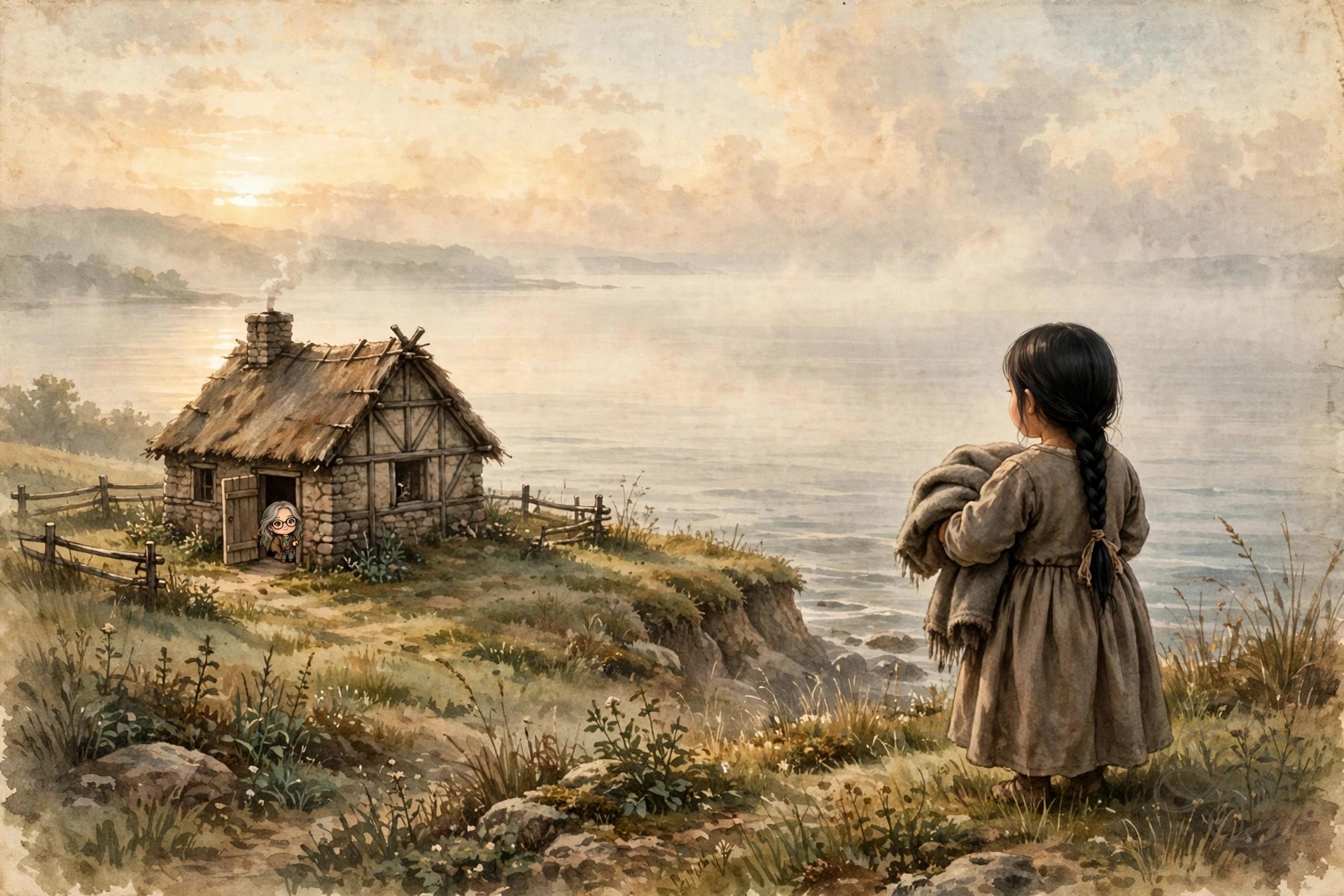
On December 13, 1698, on Block Island, a little girl of not yet six was bound out by her own parents to serve another family for eighteen years. The price written into her indenture was a gallon of rum and a blanket. Then the record closes, and in more than three hundred years, no second record of her has ever been found. This Brick Wall Wednesday is hers — the whole of what the records hold, the whole of the hunt for more, and the short list of drawers where her life after 1716 could still be written down.
The one record
The indenture stands complete on a single page — page 88 of the New Shoreham Town Book, the town book of Block Island, begun in 1673. I hold the original page, pulled and read in full. It opens: “This Indenture made this 13th of December 1698” — and it says, in the clerk’s hand, that Great James and his wife Jane bind their daughter Betty to John Rathbone and his wife Ann for “full and just time and term of Eighteen full years.” Both parents set their marks to it. The witnesses were Edward Sands and Hugh Day. And the clerk wrote the mother’s name with the family name whole: Jane Chagum.
The terms are plain, and they are hard reading. Jane was to keep the child until she was six, and then deliver her to the Rathbones. In consideration, Rathbone was to pay the parents “one galon of Rum and a blancet In hand,” then a gallon of rum yearly through the term, with blankets along the way — and the clerk’s certified extract, made by Town Clerk Nathaniel Mott in January 1699/1700, adds the one portion that was ever to be Bette’s own: the last year’s gallon was for her.
That is the record. What it proves: her parents, her name, the family she was bound to, the date, and the price. What it does not prove: anything at all about the rest of her life.
The house she was delivered into
John Rathbone Jr. and his wife Ann — Ann Dodge, married at New Shoreham in 1686 — kept a full house. Eight children of their own were born across the years of Bette’s term, from Mercy in 1688 to Thomas in 1709, and Bette served among them. One of those children, Anna, born 1703, was close to Bette’s own age — a near-age companion in the house where Bette grew up as the bound girl. John Rathbone Jr. outlived Bette’s whole term: he was still living and testifying in the spring of 1717, and he died before March 9, 1722/3.
She was not the only Native child bound on that island in those years, and her paper was not the harshest of its kind. Eight years before her, in 1690, an Indian boy named Trugo was bound by his own brothers and sister to Joshua Raymond for thirteen years and three months — Livermore’s History of Block Island tells it from the town records: thirteen gallons of rum and four cloth coats. I hold the original town-book page itself (Town Book 1, page 248), and at the foot of it, among the witnesses’ marks, stand two names that matter to this story: James Chogum — Bette’s father — and Sam Chogum, both marking as witnesses in the same town book, eight years before Bette’s own indenture was written in it. I set that beside Bette’s indenture as pattern, not as proof of anything about her — it shows the system her childhood was caught in, a system the island’s own laws of 1675, 1680, and 1709 regulated down to curfews and lashes for servants found abroad at night.
Her freedom — and the silence after it
Eighteen full years from December 13, 1698, ends on December 13, 1716. On that day, by the indenture’s own arithmetic, Bette’s term expired. She would have been somewhere between eighteen and twenty-four years old. What was hers at the end of it was the last year’s gallon of rum and the last blanket.
No discharge was written down for her — and here is the thing this hunt taught me: no discharge was written down for anyone. Rhode Island town books did not routinely record the end of a binding, and her freedom dues were fixed in the indenture itself, in advance. A freed Native woman of her time surfaces in the records only if something trips a wire: a runaway order, a lawsuit, a re-binding, a marriage, a council order binding out her child, her master’s probate. A quiet freedom — a young woman walking out of the Rathbone house in December 1716 with a gallon of rum and a blanket, owed nothing and owing nothing — is fully consistent with perfect silence in the books.
The hunt — everything searched, honestly empty
We did not guess at this wall. We ran the hunt to the end of everything I hold and everything published, and here is the accounting.
My own files first. Every appearance of her name in my research is the 1698 indenture itself, or a retelling of it. Livermore’s History of Block Island (1877), read in full: his Chagum material is her father’s generation and the pond that carries the family name — of Bette, nothing beyond the system she was bound under. The island’s marriage records (the Arnold Collection, New Shoreham): no Chagum in any spelling, no Bette or Betty bride, no bride entered as Indian at all. The published genealogies — Cooley (1898), Cutter (1912): their “Betsey” is the indenture itself, retold. A retelling is not a second record, and I flag it here so no one ever cites one as though it were.
Two women were tested as candidates, and both were set aside — in writing, so they are never merged with her later. A Betty Coyhees of Charlestown, wife of Charles Ninegret in 1743, fits Bette’s age — but she carries her own Narragansett surname, and nothing ties her to Block Island, the Rathbones, or the name Chagum. A Ruth in a 1694 inquest died in 1694, and the record names her mother — she was never Bette, and on this evidence she was not Bette’s sister either.
Two questions of my own, labeled exactly as they stand. Family thinking has wondered whether Bette could be the Betty Sam whose signature appears in 1763 — the chronology works, and that is all that works; no record joins them, and it stands as supposition only, never proof. And I once asked whether she could have become a “Betty Noka” — then corrected myself on the spot: the documented Noka woman is Esther, of a later Charlestown family. There is no Betty Noka in any record I hold. Both questions stay on the page because this series shows its work — the dead ends are part of the evidence too.
Why this wall matters
Bette is the human face of something the records usually hide in columns of rum and blankets: the bound-out Native children of colonial New England. Her parents were not strangers to the island’s paper — her father, Great James, stands in the town book in his own right, and the pond on Block Island’s north end still carries the family name, spelled Chagum Pond on the town’s own 1886 map. A family rooted enough to name the landscape had a daughter the landscape swallowed. If her story after 1716 exists anywhere, it exists because one more clerk, somewhere, wrote one more line. The short list of places that line could be is at the bottom of this post.
Sources
We source everything. Every fact above traces to one of these:
- New Shoreham (Block Island) Town Book 1, page 88 — Bette’s indenture, 13 December 1698, the original page (FamilySearch DGS 7650655, image 649), pulled and transcribed in full, spelling as written, October 23, 2026. The page stands complete on 88 alone.
- The clerk’s certified extract of the same indenture, by Nathaniel Mott, Town Clerk, January 1699/1700 — the copy that records the last year’s gallon of rum as Bette’s own portion.
- S. T. Livermore, History of Block Island (1877) — the “Enslaved” chapter (pp. 60–61): the island’s servant laws of 1675, 1680, and 1709, and Trugo’s 1690 bondage; read in full for this line, Chagum material checked throughout.
- Arnold Collection, New Shoreham marriages — full transcription checked: no bride named Bette or Betty, no Chagum in any spelling.
- Dodge Genealogy and Cooley, Rathbone Genealogy (1898) — the Rathbone household: John Rathbone Jr. and Ann Dodge, married 1686, and their eight children. (The later genealogies’ “Betsey” passages are retellings of the 1698 indenture, not new records.)
- Howe, Indians & Slaves of Block Island — the indenture in full, corroborating the town-book page.
- Map of Block Island, S. T. Livermore, 1886 — “Chagum Pond,” the family name on the island’s north end.
- New Shoreham Town Book 1, page 248 — Trugo’s indenture, 9 November 1690, the original page (photo in hand November 10, 2026): Trugo bound to Joshua Raymond by his brothers Richard and Peter (Pette) and his sister Hannah; witnessed by James Chogum and Sam Chogum, both by mark.
- My research log for this line, including the completed after-1698 hunt of October 24, 2026 — every source swept and every candidate tested is recorded there, negatives included.
The Leads — Where This Trail Still Stands Open
Bette’s life after December 13, 1716 is written down nowhere we have looked — yet. These are the live leads. If any of them rings a bell for you, I would love to hear from you.
The named pulls, in order:
- New Shoreham Town Book 2 — the town council and wardens’ minutes, about 1710–1730 (FamilySearch, town records 1675–1744). Read for Bette by any name or none — and for any child bound out of a mother named Betty, which is exactly the kind of line a council minute does keep.
- John Rathbone Jr.’s probate packet, read in full (he died before March 9, 1722/3). A master’s estate papers are one of the few places a bound or newly freed servant gets named. The 1702 will in circulation for this family is his father’s — John Jr.’s own packet has never been read end to end.
- Charlestown Town Council and Probate records, Vols. 1 and 3 (1716–1745) — the mainland shore across from the island, where a freed Bette with Narragansett country kin could surface.
- King’s County Court of Common Pleas minutes (Rhode Island Historical Society) — court paper is a tripwire record: suits, bindings, and orders are where women in Bette’s position appear.
- The Block Island Historical Society — Frank W. Rathbun’s research files. Rathbun descended from the very Rathbone family that took Bette in, and spent years researching the island’s Native history; his files were given to the Society. An inquiry about them is drafted and ready.
- The Betty Sam signature of 1763 — a supposition to test against any new record that surfaces, and never to print as proof.
The open questions:
- Did Bette marry after her freedom — and if so, under what name?
- Did she have children, and were any of them bound out in their turn?
- Did she stay on Block Island, or cross to the mainland? And where, at the end of it, is she buried?
© 2026 Ever Widening Circle Research by Coni Dubois LLC. All rights reserved.
